Wool, PETA & the CFDA -- talk amongst yourselves!
My work has been a deep dive into building awareness for healthier material choices in design, developing domestic and sustainable supply chains, driving innovation, and providing creative thought leadership to support soil-regenerating ranches. I have worked closely with Fibershed—a formidable non-profit that has spent nearly two decades scaffolding regional fiber systems that build soil and protect the health of our biosphere. Sheep on managed landscapes are often the foundation of these systems.
Imagine my horror, then, as I observed the outrageous assault on so many of these values at COS’ recent runway show. Throw in violence against women, a disregard for peaceful protest, and blind support for fast fashion, and you have the perfect storm—exemplified by PETA’s appearance and the abominable behavior of former Council of Fashion Designers of America (CFDA) CEO Steven Kolb.
As with many modern debates, few spaces are created for nuance. Instead, complex issues are reduced to a simplistic binary of "good versus bad." Social media posts and soundbites further flatten discourse, fueling polarization and clearing a path for misinformation.
Beyond the shock of witnessing Steven Kolb’s aggression—and the disturbing reality that the audience did nothing to intervene—I was deeply disappointed by the lack of meaningful dialogue around wool as a superior material choice in apparel design, particularly as a direct replacement for fossil fuel–derived synthetics.
Sheep Shearing & Why it Matters
Wool fiber stems from the shearing of agriculturally domesticated sheep. Shearing—to the surprise of some—is proper animal husbandry; it is essential care when raising fiber-producing animals. Unshorn sheep can overheat under the mass of fiber on their bodies, and their fleece can become matted to the point where they are unable to move or protect themselves from predators. Humane shearing practices are fully attainable and actively practiced across all the ranches I associate with. Do some individual shearers act carelessly? Undoubtedly, which is precisely why rigorous Wool Standards and third-party verifications exist.
Furthermore, ruminant animals like sheep are vital components of healthy soil ecosystems. As they graze, they deposit saliva into the earth, and their hooves help sink nutrients into the ground—simultaneously stimulating plant growth and sequestering atmospheric carbon. Carbon-rich soil boasts greater water retention and superior ecosystem resilience among its many critical attributes.
If only a proper dialogue had occurred.
Instead of a violent confrontation with a protester at a fast-fashion brand’s runway show, imagine if a constructive conversation had ensued—one that allowed onlookers to critically examine COS’s (and parent company H&M’s) commitment to ethical supply chains. Could the brand and CFDA leadership have demonstrated how their supply chains promote environmental health and circular innovation? Might they have addressed why the wool chosen for this collection benefited both the environment and the wearer?
Instead, we are left to wonder: Does the lack of constructive discourse signal that COS and H&M simply cannot defend their practices? And is PETA, in its absolute refusal to accept wool, inadvertently advocating for a greater reliance on fossil fuel–based synthetics?
I welcome an expansive, open dialogue on these deeper issues, and I suspect I am not alone.
To be clear, I am not advocating for PETA. However, questioning the practices of fast-fashion brands is essential when society is left holding the bag for the waste and environmental destruction they leave behind.
Fast Fashion’s Environmental Impact: A Few Key Metrics
Carbon Footprint: The fashion industry generates approximately 10% of global carbon emissions.
Water Consumption: The industry consumes roughly 215 trillion liters of water annually to grow crops like cotton and process textiles. It takes about 700 gallons of water to produce a single cotton t-shirt and 2,000 gallons for a pair of jeans.
Toxic Pollution: Textile dyeing is a leading global polluter of freshwater, frequently discharging toxic chemicals and heavy metals directly into local waterways.
Microplastics: Laundering synthetic garments releases tiny plastic particles, accounting for up to 35% of all primary microplastics polluting the world's oceans.
Ethically raised and processed wool represents a viable solution to the complex impacts of apparel manufacturing. However, true progress requires brands to implement a wide array of new practices—including fundamental supply chain adaptations and a complete overhaul of the endless delivery schedules that flood landfills with excess product.
Imagine if, at every show, brands provided Look Books detailing full transparency around their material sourcing, labor practices, and production processes. Might we then actually enjoy the fashion on display?
Furthermore, we must question why the CFDA so fiercely defends a European fast-fashion giant known for copying independent designers—the very creators the CFDA is tasked with protecting and uplifting. Is the CFDA living up to its core mission?
I will let you decide. What is clear to me is that when it comes to the CFDA’s vision of "Sustainability in Fashion," a far more nuanced conversation is required—and I, for one, welcome it.
Council of Fashion Designers of America (CFDA) mission statement:
“Our pillars include Diversity, Equity, and Inclusion, as well as Sustainability in Fashion.
The organization provides its Members with timely and relevant thought-leadership and business development support. Emerging designers and students are supported through professional development programming and numerous grant and scholarship opportunities.
In addition to hosting the annual CFDA Fashion Awards, the organization owns the Fashion Calendar and is the organizer of the Official New York Fashion Week Schedule.
The CFDA Foundation, Inc. is a separate, not-for-profit organized to mobilize the membership to raise funds for charitable causes and engage in civic initiatives.”
Let’s engage in a meaningful, “Yes, And” conversation—one that offers solutions while bringing greater transparency and collective participation to the process.
If not now, when?

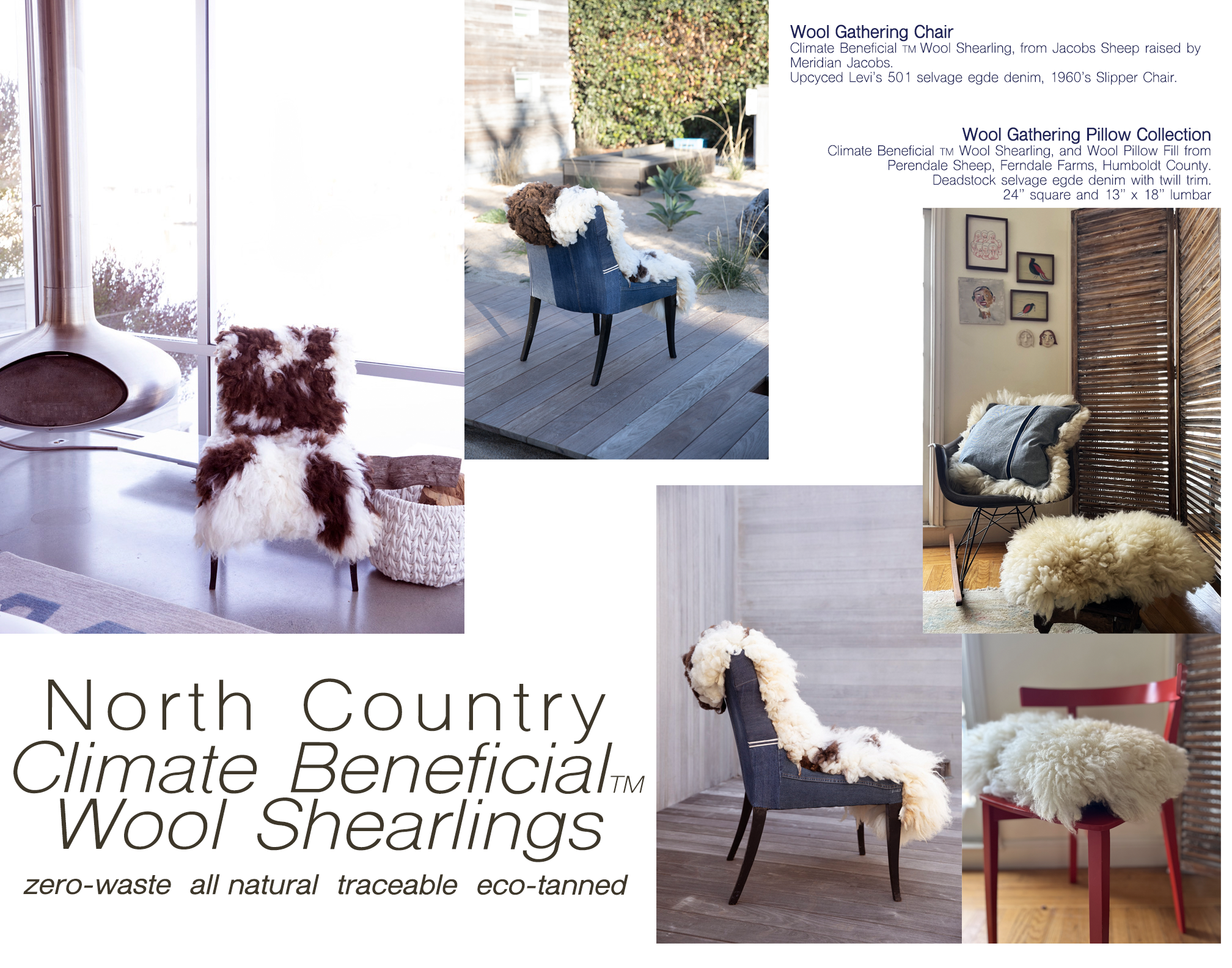
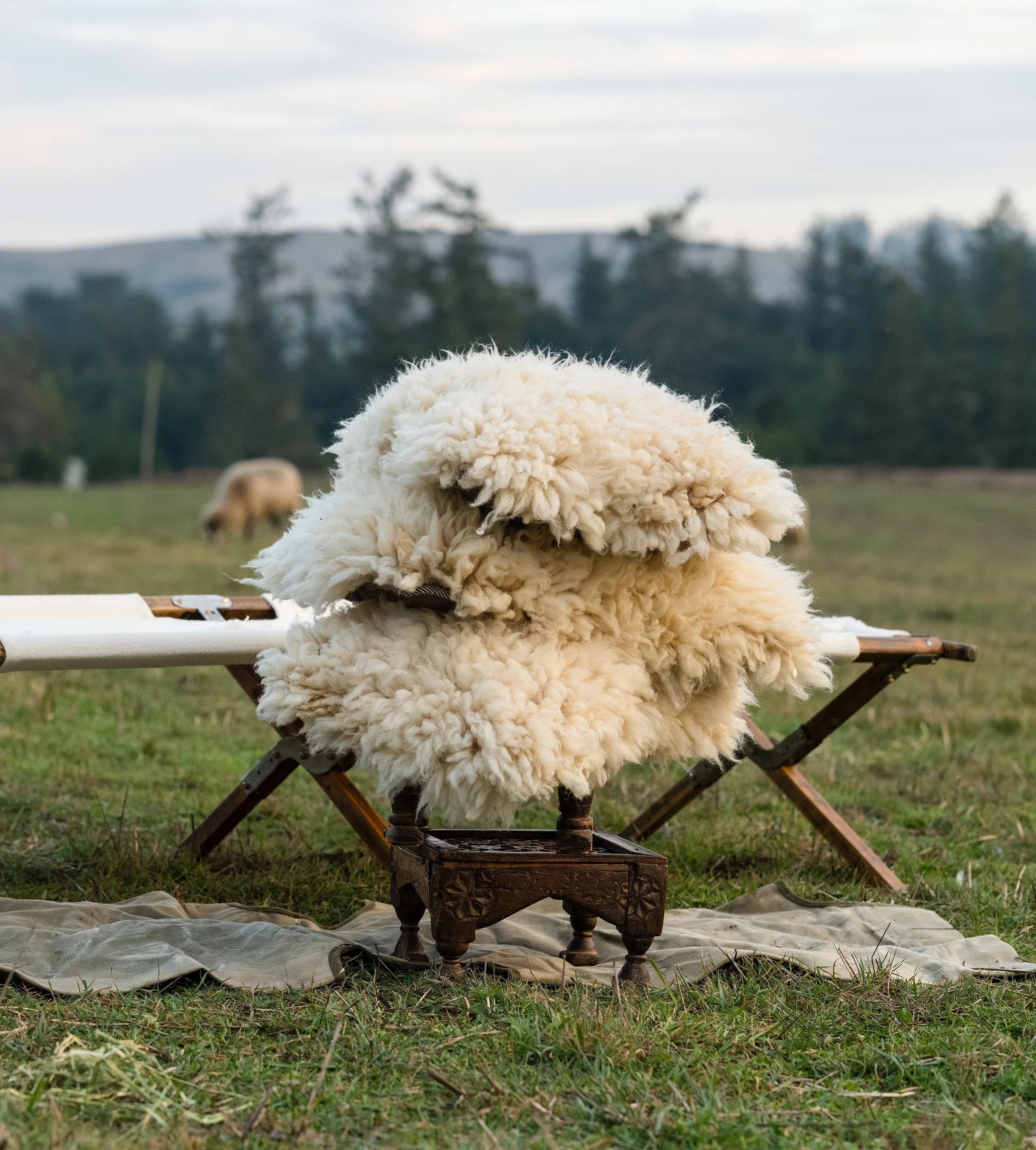
Grange Home’s (above) designs utilizing Climate Beneficial ™ Wool—from fiber to woven fabric and the eco-tanned hides. Photo by Paige Green at Bodega Pastures, a Fibershed ag producer’s landscape where carbon-farm plans are implemented, ensuring healthy soils are the most meaningful agricultural product.
Below, upcycled Grange Home product—zero-waste & traceable.